
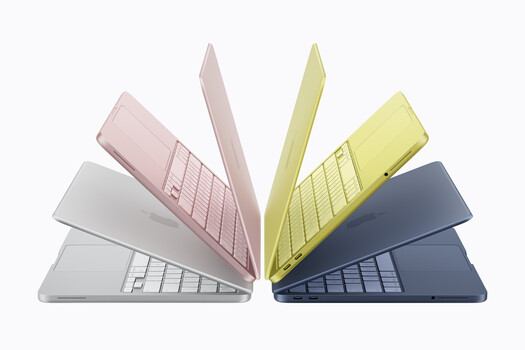

Every time Apple releases a new product, the internet runs the same play: benchmark it against the most expensive thing in the lineup, declare it insufficient, and move on. The MacBook Neo is getting that treatment right now. The internet is wrong.
It only has 8 GB of memory. The display is sRGB, not P3. There is no keyboard backlighting. The trackpad physically clicks instead of using Force Touch. It runs on an iPhone chip. You cannot even get Touch ID unless you pay $100 more for the 512 GB model.
All of this is true, and none of it matters, because the MacBook Neo is not for you. It is not for me, either. It is not for anyone who already owns a Mac or who was planning to buy a MacBook Air or MacBook Pro. The Neo exists for a completely different reason, and once you understand what Apple is actually doing, the product makes perfect sense, and it’s hard to believe it won’t be a massive success.
Apple Has Never Competed Here Before
Apple has sold Mac laptops at or near the $999 mark for a long time. The white polycarbonate MacBook hit $999 back in 2008, and the entry-level MacBook Air held that price point for years after. More recently, Apple kept the M1 MacBook Air in its lineup at $999, and retailers like Walmart occasionally pushed it below $700 on clearance. But those were always older models lingering in the catalog or third-party discounts on aging inventory. Apple itself never designed and launched a brand-new laptop with a sub-$700 price tag. The budget segment, the territory dominated by Chromebooks and entry-level Windows machines, was a market Apple chose not to enter.
That changes on March 11, when the MacBook Neo goes on sale for $599. With education pricing, it drops to $499. Apple is not tiptoeing into the budget market. It is walking in with a $499 aluminum laptop that has a Retina display, 16 hours of battery life, and runs full macOS.
To understand why this is significant, you have to understand the market Apple is targeting. Chromebooks currently hold over 60 percent of the global education market. Ninety-three percent of U.S. school districts plan to purchase Chromebooks this year, up from 84 percent in 2023. That is a staggering level of institutional entrenchment. The budget Windows laptop segment fills much of what remains, with machines from HP, Lenovo, and Acer occupying the $400 to $700 range that Apple has historically ignored.
Apple has been content to let those markets exist beneath it. But the company has also watched nearly half of its Mac buyers arrive as first-time users, people switching from Windows or ChromeOS. The data tells a clear story: people want Macs, and the only thing stopping more of them from buying one has been the price. The Neo removes that barrier entirely.
The iPhone Chip Strategy
The key engineering decision that makes the Neo possible is also the one drawing the most criticism: Apple used the A18 Pro chip, the same silicon that debuted in the iPhone 16 Pro, instead of an M-series processor. This is the first production Mac to run on an A-series chip, and for the tech press, it has been an easy punchline. An iPhone chip in a laptop. A Mac that performs like a phone.
But the A18 Pro is not a weak chip. It is a 3 nm processor with a six-core CPU (two performance, four efficiency), a five-core GPU with hardware-accelerated ray tracing, and a 16-core Neural Engine. Apple claims the Neo is up to 50 percent faster for everyday tasks than the bestselling PC laptop running an Intel Core Ultra 5, and up to three times faster for on-device AI workloads. It supports hardware-accelerated H.264, HEVC, ProRes, and ProRes raw encoding and decoding. It runs Photoshop. It runs DaVinci Resolve. It runs Xcode. It handles all of that while staying completely fanless and silent. This is not a chip that struggles with real work. It is a chip that handles real work at a price point nobody expected.
The business logic is just as compelling. Apple manufactures A-series chips at a scale that dwarfs its M-series production. Hundreds of millions of iPhones ship every year, and each one carries some variant of the A-series silicon. The per-unit cost of the A18 Pro is a fraction of what an M-series chip costs, because the development investment has already been amortized across an enormous install base. Apple essentially looked at a massive supply of proven, power-efficient, and inexpensive processors and asked what else it could put them in.
The answer is a $599 laptop. No other PC manufacturer could pull this off. Dell, HP, and Lenovo do not design their own chips. They buy processors from Intel or AMD, and they license Windows or ChromeOS from Microsoft or Google. They do not control the silicon, the operating system, or the integration between the two. Apple controls all three, and that vertical integration is the only reason an aluminum laptop with a Retina-class display and all-day battery life can exist at this price. The build quality gap between the Neo and a $550 HP running Intel is not subtle. The Neo has a better display, better speakers, a better trackpad, and a better keyboard, all wrapped in a solid aluminum chassis instead of creaky plastic. That comparison is going to be devastating in a Best Buy aisle.
The Perfect Student Machine
The MacBook Neo is, more than anything else, a laptop designed for students, and it fits that role almost perfectly.
Think about what a college student actually does on a laptop. They write papers. They take notes. They attend video lectures. They browse the web. They stream music and video. They juggle a dozen browser tabs while texting on their phone. They run Google Docs, Notion, Slack, and maybe Photoshop for an elective. They need a machine that lasts through a full day of classes, survives being shoved in a backpack, and does not need to be babied.
The Neo checks every one of those boxes. The A18 Pro handles everyday multitasking without throttling or fan noise, because there is no fan. Sixteen hours of battery life means a student can leave the charger at home and make it through a full day. The aluminum build is more durable than the plastic Chromebooks and budget Windows machines it replaces. The 13-inch Liquid Retina display at 2,408 by 1,506 resolution with 500 nits of brightness is dramatically better than the dim, low-resolution panels on comparably priced PCs. And macOS gives students access to the full desktop versions of the apps they will use in their careers, not stripped-down web apps.
At $499 with education pricing, the Neo matches the cost of the Chromebook Plus devices that school districts and universities have been buying in bulk. But where a Chromebook runs a browser and a handful of Android ports, the Neo runs the same operating system and the same applications as a $2,000 MacBook Pro. A student learning Lightroom, Final Cut Pro, Logic Pro, or Xcode on a Neo is building skills on the same platform professionals use. The experience scales up. That is a fundamentally different value proposition than ChromeOS has ever offered.
Then there is the ecosystem. A student with an iPhone who buys a Neo gets Handoff, AirDrop, Universal Clipboard, and iPhone Mirroring out of the box. Notes sync. Messages sync. Calendar syncs. The laptop becomes an extension of the phone they already have in their pocket. That kind of cross-device continuity does not exist in the Chromebook world unless you are entirely inside Google’s ecosystem, and even then, the integration is not as seamless. Apple has spent years building that ecosystem, and the Neo is the cheapest ticket in.
What Chromebooks and Windows Laptops Should Worry About
The Chromebook’s dominance in education and budget computing has always rested on a simple value proposition: it is cheap, it is simple, and it works well enough for basic tasks. The Neo challenges every part of that equation.
Google’s upcoming “Project Aluminium” initiative, which aims to rebuild ChromeOS on the Android kernel, was supposed to be the next big step for Chromebooks. But if those devices launch in the $600 range with plastic builds and dim screens, they are going to look embarrassing next to the Neo. Apple just reset the expectations for what a $600 laptop should feel like, and every Chromebook and budget Windows machine is now being measured against that standard.
There is also the longevity question. Apple has a track record of supporting its machines with OS updates for many years. A Neo purchased in 2026 will very likely still be receiving macOS updates in 2032 or beyond. For a school administrator weighing a bulk purchase, that long-term software support makes the slightly higher upfront cost look like a smarter investment.
The Compromises Don’t Matter (for the Target Audience)
It is worth being honest about what Apple cut to hit this price. There is no keyboard backlighting. The base model has no Touch ID. Storage maxes out at 512 GB. Memory is locked at 8 GB with no upgrade path. The display is sRGB only, not the P3 wide color gamut found on the Air and Pro. There is no Thunderbolt, no MagSafe, and no fast charging. You get two USB-C ports, one of which is USB 2.
These are real limitations, but almost none of them matter to the people the Neo is built for.
No keyboard backlighting? Students have been using Chromebooks without backlit keyboards for over a decade. No Touch ID on the base model? A student in a shared classroom does not need biometric login. The 8 GB memory cap? For web browsing, document editing, streaming, and even light creative work, 8 GB of unified memory on Apple silicon is more than enough. A Chromebook Plus with 8 GB of RAM is considered well-equipped. The same amount on a chip as efficient as the A18 Pro, running an operating system as well-optimized as macOS, is perfectly adequate for the workload this machine is designed to handle.
The sRGB display is arguably the most notable omission for creative users, but the target audience for the Neo is not doing color-critical work. They are writing essays, building slideshows, and editing photos for Instagram. The 500-nit Liquid Retina panel is beautiful for all of that and still dramatically better than what any Chromebook offers at this price. The lack of Thunderbolt and the USB 2 speed on one port? A student plugging in a flash drive or an external display is not going to notice the difference in the way a professional transferring terabytes of footage would.
Every one of these compromises makes sense when you stop evaluating the Neo as a laptop for power users and start evaluating it as a laptop for the hundreds of millions of people whose computing needs are modest but whose expectations for build quality, display quality, and software compatibility are not.
The Long Game
Here is what the spec-sheet critics are missing: the MacBook Neo is not a product you evaluate based on what it can do today. It is a product you evaluate based on what it does to Apple’s market position over the next five to ten years.
A college freshman who buys a Neo at $499 this fall does not need it to handle intensive creative work or software development. But they spend four years learning macOS, getting comfortable with the ecosystem, and integrating their iPhone with their laptop. When they graduate and enter the workforce, when they have disposable income and professional needs, they are not buying a ThinkPad or a Surface. They are buying an Air or a Pro.
Apple is not selling a $599 laptop. It is buying future customers at $499 a head with education pricing, and at that price, the math works even if the margins on the Neo itself are razor-thin. Every Neo sold is a bet that the customer’s lifetime value within the Apple ecosystem will far exceed the hardware margin Apple sacrificed to get them in the door.
Chromebook makers should be losing sleep over this. For years, they have owned the budget segment by default. The Neo does not just compete with Chromebooks. It reframes what “budget laptop” means. When the cheapest Mac costs the same as a mid-tier Chromebook and offers a better display, better build, better battery life, and a full desktop operating system, the Chromebook’s value proposition starts to look thin. Really thin.
The MacBook Neo is not for the people who read spec sheets and argue about benchmarks. It is for the enormous number of people who have never owned a Mac and never thought they could afford one. Apple just told all of them that they can, and the rest of the laptop industry is going to feel it.