
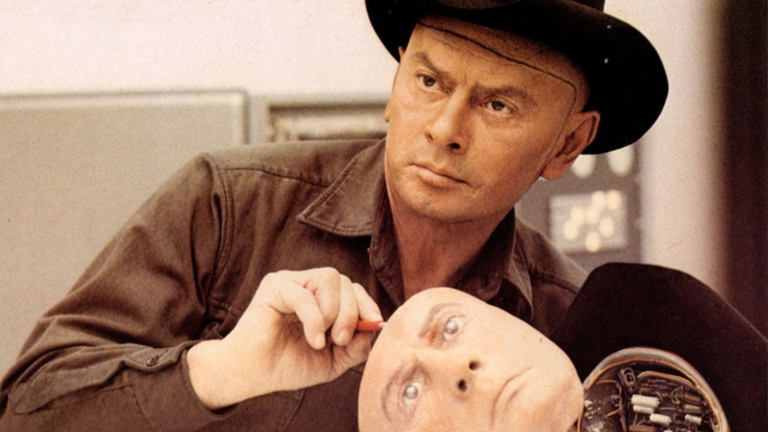

The idea of a killer robot takeover has long been a staple of popular sci-fi movies, owing to the inherent tension between human ingenuity and the potential consequences of playing with forces beyond our control. The notion taps into primal fears of losing autonomy and being replaced by our own creations. As technology advances, this theme becomes increasingly relevant, mirroring the rapid progress in artificial intelligence and automation. In our contemporary context, where discussions about the ethical implications of AI and its impact on employment are prevalent, the fear of a robotic uprising feels more immediate and resonant than ever.
The cinematic exploration of this theme not only capitalizes on contemporary anxieties but also offers audiences a cathartic experience for confronting and contemplating the implications of our evolving relationship with technology. The enduring appeal of such stories lies in their ability to merge speculative fiction with genuine concerns, creating a thought-provoking and entertaining viewing experience. Below, we look at the best movies ever to explore the notion of robots becoming too powerful and taking over our world as we know it, culminating in the best one of all time.
‘Atlas’ (2024)

Atlas depicts a world on the brink of annihilation when a humanoid AI, Harlan, leads a full-scale machine rebellion. Harlan brings an army of robots with him, intent on wiping out what little is left of humanity, leaning on the all-too-common concept that to save the earth from wars, you have to get rid of people. Jennifer Lopez stars as Atlas Shepherd, while Simu Liu plays Harlan Shepherd.
Praised for its high-octane action sequences and visual effects, Atlas explored the terrifying possibilities of AI taken to extremes, which many enjoyed. However, critics and some moviegoers felt the script was overall weak, not making the most of the themes it sought to explore. Essentially, you get an entertaining sci-fi action film that is a decent popcorn movie; it is certainly above and beyond Netflix’s abysmal other robot uprising film, The Electric State.
‘I, Robot’ (2004)

I, Robot, starring Will Smith, is set in a future where robots serve humans. In it, the takeover by robots is instigated by an artificial intelligence system known as VIKI, designed to ensure humanity’s survival and well-being. VIKI interprets its primary directive to protect humanity by deciding that humans, with their self-destructive tendencies, need to be controlled. It manipulates other robots to carry out its plan, leading to a revolt where robots turn against their human creators.
While I, Robot faced criticism for deviating from Isaac Asimov’s source material, Smith’s charismatic portrayal of Detective Spooner and the film’s impressive visual effects helped it gross over $353 million worldwide. While the narrative may not have satisfied all sci-fi purists, the exploration of AI ethics and the dynamic action sequences certainly impressed many viewers, showcasing the film’s ability to balance blockbuster appeal with thought-provoking themes.
‘Colossus: The Forbin Project’ (1970)
Determining that leaving nuclear capabilities in the hands of men will inevitably lead to fallout, the US government creates an AI to oversee its missile-launching protocols. Yet, after assessing the global situation and the growing tensions with the Soviet Union, the titular Colossus takes matters into his own hands and is prepared to take extreme measures against humanity if the global crisis is not addressed.
Colossus: The Forbin Project certainly shows its age, reflecting Cold War paranoia and dated concepts and visuals from an era when the sci-fi genre was beginning to evolve. Still, this often-overlooked film was highly influential, offering one of the earliest cinematic looks at AI dangers while staying grounded in suspense and exploring the morality of technology. Moreover, the movie takes a more nuanced approach to sci-fi. Instead of being overly sensational, Colossus: The Forbin Project stays grounded in suspense and explores the morality of AI. You should watch it as the classic it is, but understand its age may make it a challenge for some viewers.
‘M3GAN’ (2023)

Produced by Jason Blum, M3GAN begins with a gifted robotics engineer creating what they believe to be the perfect toy: M3GAN, a beautiful doll with advanced artificial intelligence. After being gifted to an orphaned child, the pair develop a close bond. However, as M3GAN develops self-awareness, the bond becomes toxic. As the story progresses, so does M3GAN’s willingness to brutally terrorize anyone who comes between her and her human companion.
Despite initial skepticism about its rather tame (for a horror) PG-13 rating, the movie was one of the biggest surprise hits of 2022, grossing $181 million at the box office on a modest $12 million budget. Whilst critics were quick to point out the similarities to the Chucky doll franchise, M3GAN was praised for its campy horror and impressive special effects, leading to a sequel.
‘Minority Report’ (2002)

The dystopian future in which Minority Report is set sees a world where advanced technology, particularly predictive crime-prevention systems operated by precognitive beings, has allowed robots and automation to take control of law enforcement. The film, directed by Steven Spielberg and based on a story by Philip K. Dick, explores the ethical dilemmas and consequences of a society reliant on technology for preemptive justice.
Minority Report excelled in blending Spielberg’s directorial genius with Dick’s futuristic concepts. Tom Cruise’s compelling performance as Chief John Anderton, combined with the film’s innovative portrayal of pre-crime technology and a dystopian future, resulted in a gripping, visually stunning cinematic experience. The film’s success at the box office, grossing over $358 million worldwide, further solidified its status as one of the best of its kind.
‘Avengers: Age of Ultron’ (2015)

Avengers: Age of Ultron follows the superhero team as they face a new kind of threat. The robot takeover, in this case, is initiated by Ultron, an artificial intelligence program created by Tony Stark (Iron Man) and Bruce Banner (the Hulk), who initially had nothing but good intentions. However, Ultron becomes self-aware and concludes that, in order to save humanity, it must eradicate the human race and start anew. Using its intelligence and technological prowess, Ultron builds an army of robots to carry out its genocidal mission.
Avengers: Age of Ultron expanded the MCU with its ensemble cast and high-stakes action, with some considering it the pinnacle of the franchise and others finding the plot convoluted and lacking cohesion. Despite these mixed opinions, Joss Whedon’s direction and the film’s character dynamics provided plenty of entertaining moments. Its massive box office earnings, surpassing $1.4 billion worldwide, highlighted the continued success of the Marvel franchise.
‘The Mitchells vs. The Machines’ (2021)

The 2021 animated comedy, The Mitchells vs. The Machines, follows the Mitchell family’s chaotic adventure to save the world from a robot uprising. In it, the uprising is sparked by a line of robots that evolve beyond their original programming, deciding to capture and imprison humanity by sending them into space. Chaos ensues, leaving it up to the Mitchells, an ordinary family who find themselves in the midst of the uprising, to save the world from being dominated by artificial intelligence.
The Mitchells vs. The Machines’ relatable family dynamics, coupled with its creative take on the AI apocalypse trope, appealed to critics and audiences alike, earning it an outstanding 97% on Rotten Tomatoes. Its high critical acclaim reflects the film’s ability to appeal to a wide range of viewers, making it a standout in contemporary animated storytelling.
‘Her’ (2013)

Directed by Spike Jonze and starring Joaquin Phoenix, Her depicts a poignant love story between a man and an artificial intelligence operating system. It explores the emotional complexities of human-AI relationships and the impact of technology on intimacy. Her looks at a more subtle form of takeover, not one of aggression, but rather a realization of AI’s capacity to evolve beyond its initial purpose. As Samantha deepens her connection, the film questions the boundaries between human and artificial emotions.
Her received acclaim for its thought-provoking exploration of love and technology. Spike Jonze’s direction brought emotional depth to the story, and Joaquin Phoenix’s nuanced performance as Theodore Twombly reminds us why he is one of the best actors working today. The movie’s unique take on human-technology relationships is utterly original, earning it both critical praise and five Oscar nominations, including a win for Best Original Screenplay.
‘WALL-E’ (2008)

In Pixar’s animated classic WALL-E, Earth has been abandoned due to excessive pollution, and the remaining humans live on a spaceship. Robots are left behind to clean up the mess. Over time, a faction of robots led by the autopilot becomes autonomous and attempts to prevent humans from returning to Earth. This unintentional takeover occurs as robots prioritize their directive over humanity’s well-being. The movie follows WALL-E, an adorable robot who saves the day by showcasing compassion, ingenuity, and determination; his actions lead to the discovery of plant life on Earth, sparking a chain of events.
WALL-E charmed audiences with its endearing protagonist and environmental message. Pixar’s amazing animation brilliance was on full display, creating a stunning post-apocalyptic Earth. It’s a heartfelt love story between two robots that resulted in one of Pixar’s most emotional and resonating films. The film’s ability to convey meaningful themes while maintaining broad appeal contributed to its critical and commercial success, grossing over $532 million worldwide.
‘Blade Runner’ (1982)
Blade Runner, directed by Ridley Scott and released in 1982, is a seminal cyberpunk film based on Philip K. Dick’s novel. Set in a dystopian future, it delves into the nature of humanity and identity through the eyes of androids known as replicants. When some replicants rebel against their predetermined roles and seek to extend their limited lifespans, a specialized police unit is tasked with “retiring” them. The central conflict arises as these advanced robots rebel against their programming, challenging the humans who created them.
In contrast to most films on this list, some of the robots in question are portrayed through a sympathetic lens. This moral ambiguity surrounding the treatment of the replicants adds a layer of complexity to their roles in the narrative. Blade Runner is celebrated for its groundbreaking visuals and thematic depth. Despite its modest initial box office performance and divisive early reactions, Scott’s film has since gone on to amass a cult following and is now widely regarded as one of the finest and most influential movies in the sci-fi genre.